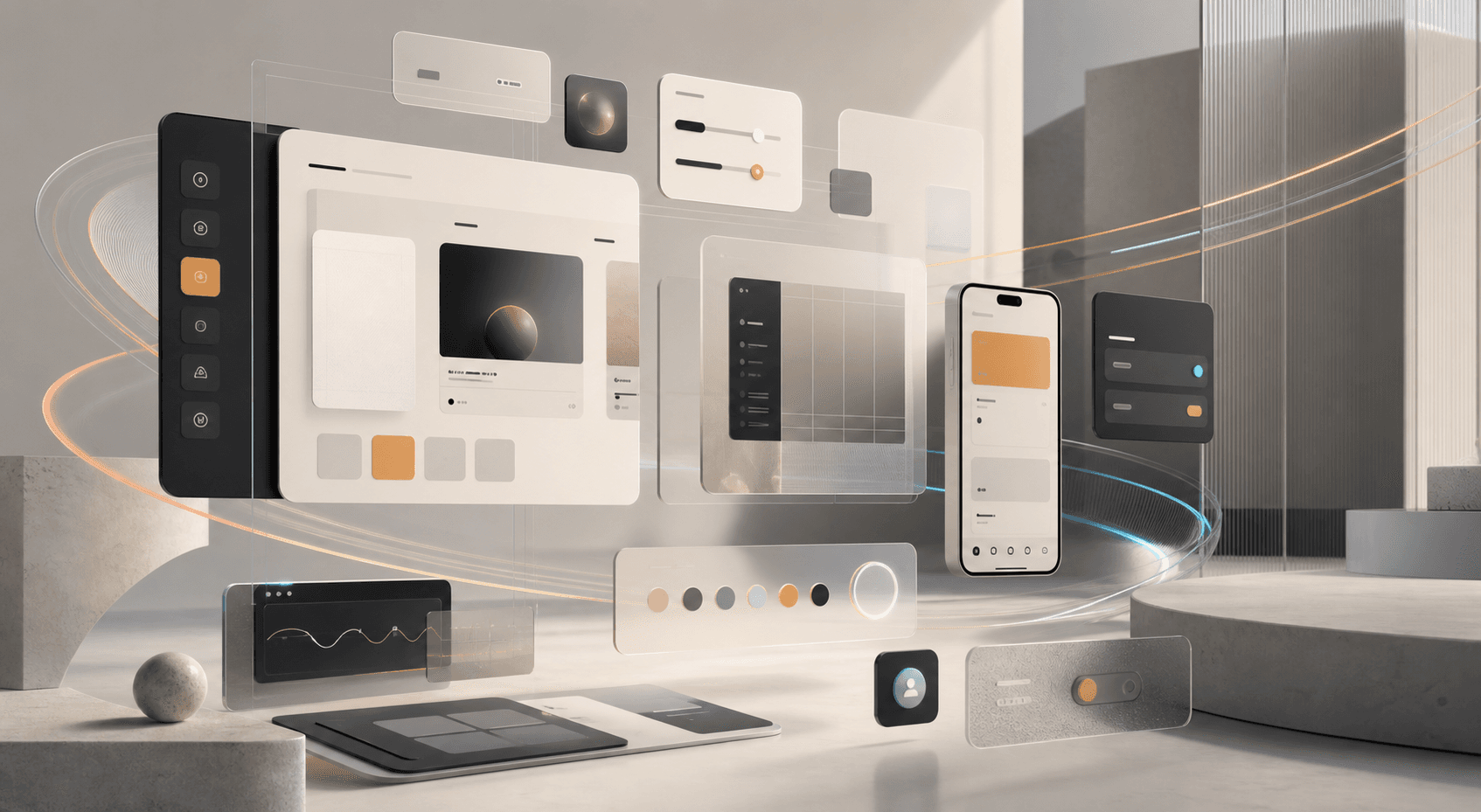
UI/UX design trends product teams should actually care about
Interface trends only matter when they improve understanding, reduce effort, or help teams build with more consistency.
Every year brings a new vocabulary of visual styles, interaction patterns, and tooling promises. Product teams do not need to chase all of them. They need to recognise the few shifts that change how users make decisions and how teams maintain interfaces.
The strongest UI/UX trends right now are less about surface novelty and more about adaptable systems: interfaces that respond to context, design tokens that carry intent, motion that explains state, and accessibility that is treated as product quality.
Adaptive interfaces are becoming normal
Static one-size-fits-all screens are giving way to experiences that respond to role, progress, device, intent, and data quality. This does not mean every product needs a personalised dashboard. It means the interface should reveal the right amount of complexity at the right time.
Good adaptive UI is quiet. It remembers context, removes redundant choices, and makes expert workflows faster without making first-time use harder.
Design systems are moving beyond components
A button library is not enough. Modern design systems need to describe behaviour, content rules, accessibility states, and implementation boundaries. Tokens are becoming a shared language for product decisions, not just colour and spacing values.
The teams getting the most value from systems are documenting how components behave under pressure: long labels, slow networks, partial permissions, empty data, and conflicting validation states.
- Document interaction states before visual variants.
- Treat accessibility rules as reusable system constraints.
- Use tokens to explain intent, not just implementation values.
- Pair component examples with realistic product content.
Motion needs a job
Motion remains valuable, but only when it clarifies relationships. A transition can show where an object came from, why a panel changed, or which action completed. It becomes noise when it competes with reading or slows down repeated tasks.
The practical trend is restraint: fewer animations, better timing, and clear purpose.


What do you think?
Please leave a reply. Your email address will not be published. Required fields are marked *